

An update on HIF-PHI therapy
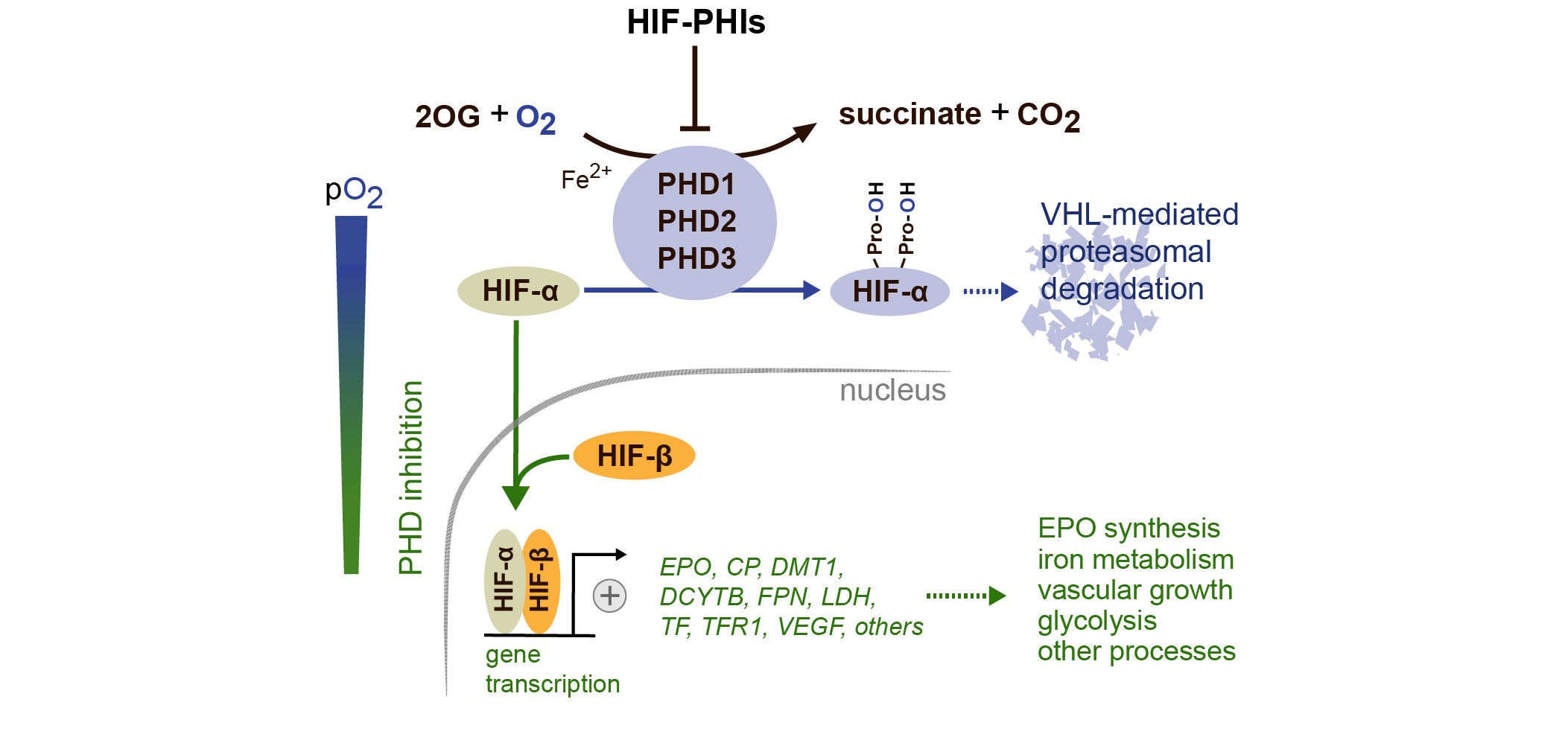
HIF-PHI therapy for CKD anemia is entering a new phase. In this 2026 American Journal of Kidney Diseases clinical review, Haase, Costa, and Koury assess where hypoxia-inducible factor-prolyl hydroxylase inhibitors (HIF-PHIs, also referred to as HIF activators) now stand. The review focuses on their mechanisms of action, their safety profile relative to erythropoiesis-stimulating agents, and their potential use in kidney transplant recipients.
Am J Kidney Dis. 2026 May;87(5):716-729. doi: 10.1053/j.ajkd.2025.10.017. Epub 2026 Jan 19.
Navigating Anemia Therapy in CKD With Hypoxia-Inducible Factor Activators: A Review
Haase VH, Costa NA, Koury MJ.
HIF-PHI therapy for CKD anemia: Abstract
The clinical challenges and safety concerns associated with the use of erythropoiesis-stimulating agents (ESAs) have provided the rationale for developing novel therapeutic approaches that address the complex pathophysiology of anemia in chronic kidney disease (CKD). Hypoxia-inducible factor-prolyl hydroxylase inhibitors (HIF-PHIs) are a new class of oral agents that effectively increase and maintain hemoglobin levels in patients with CKD. These agents stimulate the endogenous production of erythropoietin and enhance iron metabolism by activating hypoxia-inducible factors. Despite their efficacy, the use of some HIF-PHIs has been limited to patients on maintenance dialysis in some countries, including the United States, due to unresolved cardiovascular safety concerns in patients with CKD not on dialysis. In this review, we examine the mechanisms of action and erythropoietic effects of HIF-PHIs, evaluate undesirable on-target and off-target effects, and address cardiovascular and other safety concerns that have been raised in comparison to ESAs. We discuss how this novel class of oral anemia drugs may impact clinical practice, including their potential use in kidney transplant recipients.
Rationale for Novel Anemia Therapies
Anemia is a common complication of chronic kidney disease (CKD) that profoundly affects a patient’s well-being. Anemia in CKD results primarily from relative erythropoietin (EPO) deficiency, i.e., the inability to produce sufficient EPO to sustain normal erythropoiesis. EPO is the principal glycoprotein required for red blood cell (RBC) production in the bone marrow, where it promotes the survival of erythroid progenitor cells. The second major factor contributing to CKD-related anemia is absolute and/or functional iron deficiency, which limits the synthesis of heme, the essential component of hemoglobin that binds and transports oxygen. Before the introduction of HIF-PHIs into clinical practice, anemia therapy in CKD consisted of oral or intravenous iron therapy and, after assurance of iron repletion, EPO replacement therapy administered intravenously or subcutaneously as recombinant human EPO or its glycosylated derivatives, collectively known as erythropoiesis-stimulating agents (ESAs). The cardiovascular (CV) safety concerns associated with ESA use reinforced interest in therapies that address the broader pathophysiology of CKD-associated anemia.
The full review examines how HIF-PHI therapy for CKD anemia may reshape clinical practice, including unresolved cardiovascular questions in patients not on dialysis.

(click on image to view article)
